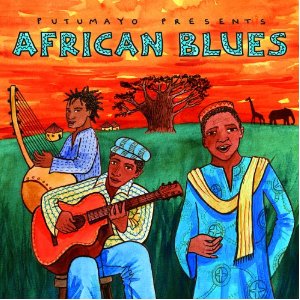
CD Reviews: Various Artists, African Beat & Latin Beat
Putumayo World Music, 2011
Things are getting to where just about every music compilation with “beat” or “groove” in the title is bound to be a collection of tunes designed for contemporary dance floors. I’m not opposed to the idea of letting remixers and electronica tinkerers get their hands on traditional music in order to make it more danceable for the club crowd. All too often, though, the traditional aspects of the music get so smothered in stiff, computerized gimmickry that the end result sounds like dumbed-down crap. So the challenge is to modernize what we call world music without putting off the purists who created a market for the stuff.CD Review: The Simpkin Project, Everything You Want
[Hughes Drive Productions, 2011]The latest from the Huntington Beach, CA-based Simpkin Project is another smart set of inspired and dance-inducing reggae from a band that’s on the rise and sounding great. Their band members – two guitarists, two keyboardists, bassist, drummer and percussionist – lay into the opening instrumental “Showtime” with the expertise of a crack Jamaican studio band, fortified by the blazing addition of Jah Horns.
CD Review: Ruff Scott, Roots and Culture
[Cool Breeze Records, 2011]If you’re a reggae artist and you release an album called “Roots and Culture,” you had best be certain that the music is reflective of such a title and that yours is a voice strong and distinctive enough to overcome a title that’s, well, kind of generic. Ruff Scott hails from Manchester, Jamaica but has spent most of his life in New York City. And as far as his having a distinctive voice, his growling but articulate singjay style was one I’d already heard and enjoyed on a few reggae compilations originating in the NYC vicinity.
CD Review: Shango Trex, Shango Trex
[Stashang/E2 Recordings, 2009]I don’t know where this guy is from or how his self-titled CD reached me (apparently a couple of years after its release). But whoever Shango Trex is, he can sing, and apart from a few tiresome girl-you’re-so-sexy sentiments, he’s singing about things that matter.
CD Review: Warrior King, Tell Me How Me Sound
[Tads, 2011]If the title of this album is Warrior King’s way of asking for an honest assessment of how he sounds at this juncture in his career, I’m happy to respond. And while his vocals are strong and supple, I have to say that it takes some time for him to sound much like a warrior or a king.
CD Review: Easy Star All-Stars, First Light
[Easy Star, 2011]
We all know the NYC-based Easy Star All-Stars are unbeatable when it comes to providing backup for reggae vets like the Meditations, Sister Carol or Sugar Minott (may he rest in peace). And sure, their remakes of classic albums Dark Side of the Moon and Sgt. Pepper’s Lonely Hearts Club Band in reggae style as Dub Side of the Moon and Easy Star’s Lonely Hearts Dub Band are pretty ingenious. (I never heard their Radiohead remake or the original, so nah know ‘bout dat one.) But now they’ve taken a step that’s bold for them: a new album of original material.
CD Review: David Solid Gould vs. Bill Laswell, Dub of the Passover
[Tzadik, 2011]
Among several breakaways from John Brown’s Body is bassist David “Solid” Gould, who, like former JBB frontman Kevin Kinsella, often has spiritual matters in mind when he makes music. Gould and his Temple Rockers band created one of reggae’s most intriguing pieces of cross-religious syncretism a couple of years ago with Feast of the Passover, a blend of Jewish and Rasta mysticism set on a foundation of reggae as deep as the Old Testament is old. The original’s not-of-this-world vibe is recaptured and in ways accentuated on the killer dub version, even though the cantor-like vocals that characterized much of the first album are minimal or merely implied here.
CD Review: Boubacar Traore, Mali Denhou
[Lusafrica, 2011]
Hard to believe it’s been six years since Boubacar Traore’s quietly stunning Kongo Magni CD was released, but Kar Kar (as Traore is affectionately known) knows what it’s like to be entirely away from music for a considerably lengthier spell. From 1968 to 1987, Traore was a farmer and shopkeeper after a military takeover in Mali when the government banned his uplifting post-independence songs. Prior, he’d been Mali’s original Mandingo blues man and a figure of rock star status. And though his return was tragically halted when his wife died in childbirth, he’s been getting his mojo back since recording his first full-length album in 1990.
keep looking »